


University of Illinois Spearheading Drive to Create Research Center Modeled on Bell Labs

Resurrecting a legend can be a tricky business, but that seems to be what the University of Illinois (UI) has in mind.
UI plans to create an advanced technology development laboratory in Chicago based on the model established by the famed Bell Labs, which was responsible for such major advances as the laser, the transistor, the UNIX operating system and C programming language, to name just a few.
Instead of the piney woods of New Jersey where Bell Labs enjoyed its halcyon years, the UI Labs will be located in the American heartland – the hub of this country's manufacturing sector. Like its predecessor, the new lab will bring together academia, industry and government to work on innovations that will transform business and society.
 According to Larry Schook, UI Vice President for Research and the UI officer spearheading the effort, the UI Labs will offer a new approach to "translational research" to address society's biggest challenges.
It's going to take about $20 million just to get the effort off the ground, and private fundraising efforts are slated to start soon. Support is anticipated from venture capitalists, government grants, private donors, strategic partnerships, and private industry.
Shook expects the UI Labs to amass a $100 million research portfolio within two years of its inauguration. The idea is to bring together top engineering and high performance computing capabilities at the UI's campus at Urbana-Champaign with Chicago's sizable and well-heeled business community. Because the research center will be in metropolitan Chicago, the proximity with the business community should make it easier for researchers to transform innovation breakthroughs into startup companies and commercial products.
One of the linchpins of the UI Labs is the university's world-class HPC facility, the National Center for Supercomputing Applications (NCSA).
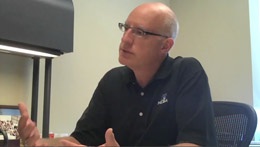 "We've been fortunate here at NCSA – particularly with the Private Sector Program (PSP) – in creating and managing the valuable intersection between our advanced tools, technologies and human resources and our user communities," says Merle Giles, head of PSP. "Manufacturing is one of the most important of these communities."
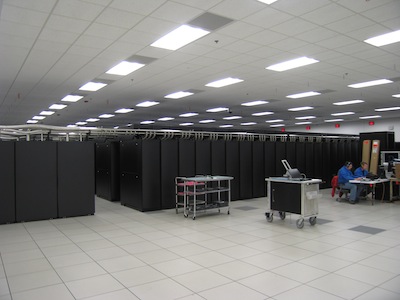 Giles notes that advanced applications, such as digital manufacturing tools like modeling and simulation, all benefit greatly from the Center's extensive HPC capabilities, which include the fabled Blue Waters petaflop system from Cray.
"We must bridge the digital side of the equation, which is so often limited to digital design," Giles continues. "Manufacturers need to bridge design with real factory floor prototypes and production systems. UI Labs is expected to be a place where we can more effectively bring together applied researchers and consultants with extensive human and machine resources. Working with UI Labs, we hope to create a broad set of resources that are highly accessible to the manufacturing and business communities."
Giles explains that a good proportion of PSP's existing efforts reach out to a broad base of manufacturing clients in order to provide them with the digital tools necessary to compete in today's global marketplace. UI Labs will continue and intensify that kind of support.
"What I deal with here at NCSA is business and economic development," he says. "UI will provide the research. PSP will help companies and other organizations to apply and commercialize that research. In order to make that happen with our 26 partner companies, we bridge the gap between their domain expertise and high performance computing and computer science. HPC provides the advanced tools and technologies that the computer sciences need to create better code and understand what's happening with the software in the domain. For example, this kind of expertise is fundamental in allowing the manufacturing sector make the best use of two HPC-driven primary building blocks – finite element analysis (FEA) and computational fluid dynamics (CFD). Our participation with UI Labs will make these kinds of services even more available."
The other essential ingredient that PSP brings to the table is consulting. Giles says that NCSA has a highly experienced and knowledgeable staff that knows how to talk to client companies about their challenges and how, working through UI Labs, they can apply resources such HPC modeling and simulation to accelerate innovation and capitalize on advanced research. And a side benefit for Giles' group is that it will allow NCSA to grow PSP's consulting business beyond the vertical private industry companies it serves today.
The exact location of the UI Labs is still uncertain but backers of the research center are focused on three or four sites in downtown Chicago and the West Loop. The idea is to locate the center where it is part of the city's vibrant cultural life and business community, making it an attractive resource for researchers, faculty and students in the drive to convert innovative research into marketable products and viable companies.
And at the heart of this effort is manufacturing.
The lab will also tackle problems in energy, transportation, food product and health care. But Schook identified manufacturing as a key area for early research.
"The prospect of working with numerous researchers to serve a broad base of communities is an extremely promising development," Giles concludes.


