
ISC
Published in collaboration with NCMS
Digital Manufacturing Report

News & information about the fast-moving world
of digital manufacturing, modeling & simulation

Language Flags

A Quantum Leap for Classical Computing


Quantum computing: the technology that could smash Moore's Law, allowing for unprecedented levels of computing power that could enable us to model highly complex processes – such as the functioning of the heart or brain – with relative ease, making it one of the most highly anticipated breakthroughs of the near future.
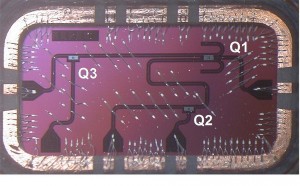
The goal is to harness the unique behavior of particles at the quantum scale. These “qubits,” with information stored in subatomic particles, can mimic transistor storage by existing in a state of “1” or “0,” (just like transistors,) as well as existing in a superposition of both states. As the number of qubits on a circuit increases, so does the number of possible states, resulting in an exponential increase in the amount of information contained within. To put that in perspective, a quantum computer with a mere hundred qubits would be capable of solving certain problems more quickly than the most powerful supercomputers today.

But, according to Chris Peikert, cryptographer and computing scientist at Georgia Institute of Technology, “There are quite vigorous debates about whether quantum computers will ever actually be built.” However, according to Natalie Wolchover of Simons Science News, even if this worst-case scenario comes to pass, the ideas and techniques fueling quantum research may help solve long-standing problems in classical computer science, mathematics and cryptography.

Most recently, quantum ideas have furthered data encryption schemes, developed a formula for the minimum length of error-correcting codes, and refuted an antiquated algorithm claiming to solve the traveling salesman problem, which seeks to determine the fastest route through multiple cities.

According to Oded Regev, a computer scientist working at New York University, the link between quantum computing theory and the solving classical computing problems is no coincidence, noting that “…there are so many instances when we 'think quantumly' and come up with a proof.”

This trend has led some researchers to change their viewpoint from regarding quantum computing as an obscure niche to a generalization of classical computing, while compelling others to brush up on their physics.

As researchers push the field of quantum computing forward, plenty of fingers will be crossed for a breakthrough. But even if their hopes are met with disappointment, researchers' efforts will likely yield even more interesting classical results.

Full story at Simons Foundation

RSS Feeds

Subscribe to All Content

Most Recent Blogs


Feature Articles

Floodgates Open for the Industrial Internet

So far, the story surrounding the industrial Internet has been centered around GE, and their plans to infuse their factories with thousands of sensors that will bring big data to manufacturing. But after record-breaking floods from Hurricane Sandy took their toll on New York and New Jersey, environmental and civil engineers have found a new application for the Internet-connected sensor system.
Read more...

GM Invests in HPC Center for Crash Test Simulations

As the cloud becomes an increasingly attractive option for manufacturers with big needs in IT, scalable options such as outsourced data centers have become a must-have for many companies. But General Motors has taken a step in the opposite direction when its $130 million datacenter went online Monday in the suburb of Warren, Michigan.
Read more...

Boosting the Workforce, One Veteran at a Time

When we talk to manufacturers of any size, one concern across the board has been finding engineers with sufficient education and training to do their job. Taking one step toward alleviating this issue is Siemens, who have launched a U.S. job training initiative for veterans, hoping to round out the training of engineers throughout the country.
Read more...

Short Takes

Airbus Enters the Composite Class

May 17, 2013 | This week, Airbus towed its newest airliner, the A350 XWB, out of its hangar and is poised to roll it into the spotlight of the upcoming Paris Air Show. The A350 XWB has been designed with the goal of surpassing the 787 in fuel efficiency and comfort, and has forgone metal for composite materials to make it happen.
Read more...

3D Printing Meets Augmented Reality

May 16, 2013 | Sander Veenhof and Joris van Tubergen, of the Netherlands, joined their skills in media art and design to merge 3D printing with augmented reality. They call the result "UltimARker" and like the 3D printer it works with it's been designed for the open source community to give consumers more detailed information about their 3D printer.
Read more...

Could a Driverless Highway Be Around the Corner?

May 16, 2013 | A recent survey by Cisco Systems found that 57 percent of consumers worldwide are in favor of using driverless cars, with 60 percent approval in the United States, suggesting that the world might be more ready for autonomous vehicles to hit the road than previously thought.
Read more...

White House Puts $200 Million toward Military Manufacturing

May 10, 2013 | We've known since Obama's State of the Union address this year that 3D printing is a key pillar in the president's plan for America's future in manufacturing, but on Thursday this was made even more clear with the announcement of a competition to create three manufacturing innovation institutes, to be modeled after a government-funded 3D printing center.
Read more...

MIT Robots Tackle IKEA Flat Packs

May 09, 2013 | Finally, we have someone to look to when we have to assemble our IKEA furniture--or at least something. This week, this solution was showcased at the IEEE International Conference on Robotics and Automation, proving that robots might soon be surpassing humans at yet another task. At least we can gladly hand this one over.
Read more...

Sponsored Whitepapers

Big Data and Big Analytics for Product and Process Quality

03/20/2013 | SAS | This white paper examines how an enterprise-wide quality platform can turn existing data into substantial and sustainable revenue growth and cost savings for global manufacturers. The paper is based on the findings of the IW/SAS Enterprise Quality Survey completed by more than 400 manufacturing executives. The objectives of the survey were to determine concerns about quality among manufacturers; investigate the tools used to measure quality; and examine how using enterprise-wide analysis on quality data improves performance.

TATA Steel Automotive Engineering Depends on Univa

07/19/2011 | Univa | TATA Steel Automotive Engineering’s concern grew when open source Grid Engine support and development was discontinued by Oracle. Grid Engine is a business critical application in their environment. They recognized the likelihood that product enhancements and innovations would cease. Read how TATA Steel Automotive Engineering moved from a self-support solution to Univa Grid Engine. You can get more out of your environment and your budget with Univa Grid Engine.

Conferences and Events

Featured Events


Copyright © 2011-2013 Tabor Communications, Inc. All Rights Reserved.
Digital Manufacturing Report is a registered trademark of Tabor Communications, Inc. Use of this site is governed by our Terms of Use and Privacy Policy.
Reproduction in whole or in part in any form or medium without express written permission of Tabor Communications Inc. is prohibited.
Powered by Xtenit.