


UK Maneuvering to Play Major Role in Nuclear Renaissance
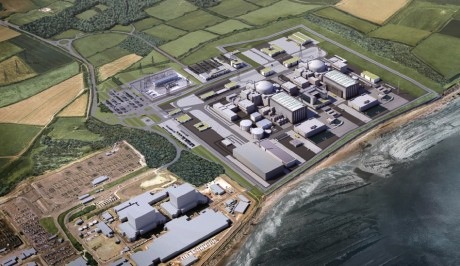
Hinkley Point nuclear power station, Somerset
The United Kingdom wants to get back into the nuclear power game as a major player.
According to the World Nuclear Association, in the late 1990s about 25 percent of the total electricity generated in the UK came from nuclear power plants. But since then, this figure has gradually declined as old plants go offline and the plants that are operating are afflicted with a variety of age-related problems that impact their availability and output.
Today the UK has 16 reactors that generate about 19 percent of the country's electricity. All but one of these reactors will be retired by 2023. The situation, however, is not dire. In the 1990s, new nuclear builds were effectively ruled out until 2006, when a review of nuclear policy turned government opposition into support – at least in England and Wales – for new nuclear plants financed and built by private sector companies.
In fact, the country has in place the requisite full fuel cycle facilities, including reprocessing plants. It has conducted a thorough assessment process for new reactor designs and their siting. The first of some 19 GWe of new-generation plants are slated to go online in 2018. This new generation of nuclear power stations will require a total investment of around £60 billion. And, according to a 2012 study by the Institute for Public Policy Research, investments in these new stations could raise the UK GDP by over £5 billion, create 32,500 jobs, and increase nuclear industry exports by up to £900 million.
In an indication of how seriously the UK government is taking this nuclear reawakening, the Department for Business, Innovation and Skills recently announced a major Regional Growth Fund award to jumpstart the country’s efforts. (The organization is a ministerial department responsible for government policy in, among other things, competition, innovation, regional and local economic development, and science and research.)
Nuclear AMRS Award
The award of £37.1 million was made to the University of Sheffield’s Nuclear Advanced Manufacturing Research Center (Nuclear AMRC). The university is working in partnership with Rolls-Royce, the lead company for the UK Nuclear supply chain. The Regional Growth Fund’s charter is to support a “programme of supplier development and manufacturing research and development to create value in the UK that would otherwise migrate overseas.” The renaissance of the UK’s nuclear plant capabilities fits nicely into this mission statement.
The Nuclear AMRC funds will support both supplier development and manufacturing R&D in partnership with key industrial developers.
Coincidently, Britain’s nuclear expansion plans received another shot in the arm when, on the same date as the AMRC announcement, Japan’s Hitachi signed a £700 million deal to start building the next generation of power plants for the UK. The facilities are planned to start feeding electricity into the national grid in 2020 and are expected to generate power equivalent to up to 14 million homes over 60 years.
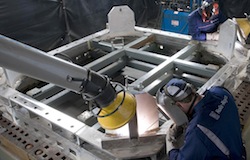 As one of the UK’s leading and largest educational institutions, the University of Sheffield is an inspired choice for the award. It has been named University of the Year in the Times Higher Education Awards for exceptional performance in research, teaching, access and business performance. Also important is the universities ties to industry that include research partners and clients such as Boeing, Rolls Royce, Unilever, Boots, AstraZeneca, GSK, ICI, and Slazenger.
Naturally, when the press release announcing the Nuclear ARMC award was issued, it contained the usual congratulatory and optimistic statements from various representatives of the parties involved. For example, Professor Keith Ridgway, ARMC director, noted that the award, when compared with other initiatives, provides “strong support for UK suppliers with aspirations to address the global Civil Nuclear new build opportunity, and creating process technology and intellectual property that will enable export-led growth and long-term competitive advantage for UK supply chains… It is believed that this market could be worth more than £500 billion over the next ten years.”
Professor Stephen Court, Operations Director at the Nuclear ARMC added some details to the direction the Center’s support will take when he was quoted as saying, “…we work with supply chain companies to enhance their technical capability to compete on cost, quality and delivery. We also give manufacturers clarity and knowledge on nuclear codes and standards, which helps them to meet and exceed the demanding requirements of this industry.”
SME Speaks Out
In contrast to the carefully crafted statements appearing in the Nuclear ARMC press release, Digital Manufacturing Report contacted one of the members of the initiative and received this candid comment from Vincent Middleton, chairman of Newburgh Engineering Company Ltd:
“As a second tier member of the Nuclear AMRC and an SME that has been in the nuclear sector since the 1950's I would like to re-iterate the importance of the Nuclear Industry for the SME community of this country. We led the world through the sixties and seventies only to have it taken away from us by politicians. I am a firm believer that we can take on the world again given assurances that we will not have the rug pulled from under us once again. It is difficult for me to understand a Government that owned the nuclear sites and a nuclear power station manufacturer, of great repute, selling both off just before deciding they are going to build new stations. One can only assume that it was through incompetence that they did it as the alternative is not very palatable.”
Middleton adds, “The SME's are where inspiration is born and it is vital that we increase the numbers taking part so that we once again create a fantastic nuclear supply chain, not just for UK new build, but also for global supply.”
But a nuclear renaissance that many of the comments presuppose is not assured. In fact, the UK may be taking a high-stakes gamble on a technology that might falter and fade. Just a few of the hurdles the industry faces are typified by: concerns about its ability to compete with other energy sources; safety, especially in the wake of the Fukushima disaster; what to do with waste and spent fuel; nuclear technology’s minimal impact on climate change, at least in the short run; and the risk of proliferation.
Despite these hurdles, the Regional Growth Fun clearly expects a nuclear renaissance to take place and wants to assure that the UK will play a major role in making it happen. Time will tell.


