
ISC
Published in collaboration with NCMS
Digital Manufacturing Report

News & information about the fast-moving world
of digital manufacturing, modeling & simulation

Language Flags

In-Car Ethernet: The Backbone of the Automobile
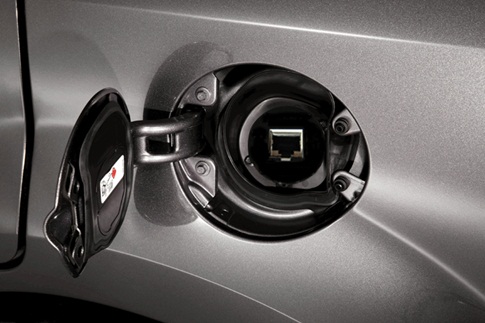

If someone asked you “What is the backbone of your car?” you might respond with “the chassis” or perhaps “the drive train.” But according to Kevin Brown, VP and general manager of the Phy Group for Broadcom, that answer is going to be “Ethernet.”

Several miles worth of cables snakes through the innards of the average vehicle, controlling everything from the anti-lock breaks to your gas gauge. The result is a labyrinth of interwoven lines and adding significant weight to the car, which Ethernet aims to relieve.

Not only would Ethernet alleviate the significant costs and complexity of traditional wiring, this less-expensive, lightweight solution would also reduce a vehicle's weight, boosting fuel efficiency.

While Broadcom estimates that Ethernet adoption could reduce connectivity costs by a not-insignificant 80 percent, its estimation of a 30 percent reduction in wiring weight spells up to 100 pounds in weight reduction.

However, in order to reap the benefits of this sizable weight reduction, car manufacturers would first need to integrate several black boxes to which the Ethernet would connect. Ultimately, each car would have a single, master black box that controls the entire vehicle. By this token, the black box would function as the car's brain, with the Ethernet acting as the spinal cord. So, perhaps “backbone” was a premature label.

Currently, the promise of in-car Ethernet is limited to non-critical systems, such as back-up cameras, but it's not hard to imagine a system that would link SatNav to the transmission controller, allowing the car to make on-the-fly changes to the suspension and gear ratios in order to maximize fuel economy.

Despite the promise of in-car Ethernet and the dedicated efforts put in by collaborations by companies such as Hyundai and Broadcom, the technology is still years away from showroom floors, let alone broad-scale implementation.

This won't be automakers' first attempt at in-car Ethernet implementation: BMW created both the “multiplex” system found in the 1980's 8-Series coupe, as well as the “Flexray” technology used in the current X5 SUV. But unlike previous iterations, in-car Ethernet is now capable of anywhere from 100 Mbps to 1Gbps while continuing to reduce complexity, weight and cost.

Full story at Wired


RSS Feeds

Subscribe to All Content

Most Recent Blogs


Feature Articles

Floodgates Open for the Industrial Internet

So far, the story surrounding the industrial Internet has been centered around GE, and their plans to infuse their factories with thousands of sensors that will bring big data to manufacturing. But after record-breaking floods from Hurricane Sandy took their toll on New York and New Jersey, environmental and civil engineers have found a new application for the Internet-connected sensor system.
Read more...

GM Invests in HPC Center for Crash Test Simulations

As the cloud becomes an increasingly attractive option for manufacturers with big needs in IT, scalable options such as outsourced data centers have become a must-have for many companies. But General Motors has taken a step in the opposite direction when its $130 million datacenter went online Monday in the suburb of Warren, Michigan.
Read more...

Boosting the Workforce, One Veteran at a Time

When we talk to manufacturers of any size, one concern across the board has been finding engineers with sufficient education and training to do their job. Taking one step toward alleviating this issue is Siemens, who have launched a U.S. job training initiative for veterans, hoping to round out the training of engineers throughout the country.
Read more...

Short Takes

Airbus Enters the Composite Class

May 17, 2013 | This week, Airbus towed its newest airliner, the A350 XWB, out of its hangar and is poised to roll it into the spotlight of the upcoming Paris Air Show. The A350 XWB has been designed with the goal of surpassing the 787 in fuel efficiency and comfort, and has forgone metal for composite materials to make it happen.
Read more...

3D Printing Meets Augmented Reality

May 16, 2013 | Sander Veenhof and Joris van Tubergen, of the Netherlands, joined their skills in media art and design to merge 3D printing with augmented reality. They call the result "UltimARker" and like the 3D printer it works with it's been designed for the open source community to give consumers more detailed information about their 3D printer.
Read more...

Could a Driverless Highway Be Around the Corner?

May 16, 2013 | A recent survey by Cisco Systems found that 57 percent of consumers worldwide are in favor of using driverless cars, with 60 percent approval in the United States, suggesting that the world might be more ready for autonomous vehicles to hit the road than previously thought.
Read more...

White House Puts $200 Million toward Military Manufacturing

May 10, 2013 | We've known since Obama's State of the Union address this year that 3D printing is a key pillar in the president's plan for America's future in manufacturing, but on Thursday this was made even more clear with the announcement of a competition to create three manufacturing innovation institutes, to be modeled after a government-funded 3D printing center.
Read more...

MIT Robots Tackle IKEA Flat Packs

May 09, 2013 | Finally, we have someone to look to when we have to assemble our IKEA furniture--or at least something. This week, this solution was showcased at the IEEE International Conference on Robotics and Automation, proving that robots might soon be surpassing humans at yet another task. At least we can gladly hand this one over.
Read more...

Sponsored Whitepapers

Big Data and Big Analytics for Product and Process Quality

03/20/2013 | SAS | This white paper examines how an enterprise-wide quality platform can turn existing data into substantial and sustainable revenue growth and cost savings for global manufacturers. The paper is based on the findings of the IW/SAS Enterprise Quality Survey completed by more than 400 manufacturing executives. The objectives of the survey were to determine concerns about quality among manufacturers; investigate the tools used to measure quality; and examine how using enterprise-wide analysis on quality data improves performance.

TATA Steel Automotive Engineering Depends on Univa

07/19/2011 | Univa | TATA Steel Automotive Engineering’s concern grew when open source Grid Engine support and development was discontinued by Oracle. Grid Engine is a business critical application in their environment. They recognized the likelihood that product enhancements and innovations would cease. Read how TATA Steel Automotive Engineering moved from a self-support solution to Univa Grid Engine. You can get more out of your environment and your budget with Univa Grid Engine.

Intersect360 HPC500 Conferences and Events

Featured Events


Copyright © 2011-2013 Tabor Communications, Inc. All Rights Reserved.
Digital Manufacturing Report is a registered trademark of Tabor Communications, Inc. Use of this site is governed by our Terms of Use and Privacy Policy.
Reproduction in whole or in part in any form or medium without express written permission of Tabor Communications Inc. is prohibited.
Powered by Xtenit.