


Dell and SAP Team Up to Offer Faster Access to Key Operational Data

The growing tide of big data sweeping through organizations both large and small is having a significant impact on manufacturing companies, according to Dan Quirk, Global Director for Industry Solutions at Dell Services.
Manufacturers, he points out, collect large quantities of unique data that other industries do not. For example, machines and reporting systems on the shop floor generate huge amounts of data that is collected at a very detailed level, but not necessarily aggregated in a timely fashion, if at all. Procurement, inventory and transaction data from stock movements – in fact, activity up and down the entire supply chain – all add to the growing heap of information resident in the IT organization’s primary storage systems and in silos scattered throughout the company. And members of the manufacturer’s sales staff do their part by adding orders, customer information, and projections to the mix. It’s invaluable information.
But this vast treasure trove of data is worthless unless it can be quickly aggregated and analyzed to help organization make better decisions and respond to a constantly changing competitive landscape.
“We’ve been working with our customers to try and find ways to help manufacturers analyze all that data in order to make better decisions around such key areas as scheduling, evaluating the success of new product releases, and determining if they are meeting utilization, production and financial targets,” Quirk says.
Which is why Dell has teamed up with SAP to help its customers adopt the SAP HANA (high performance analytic appliance) in-memory database solution. The big advantage of the SAP software is speed.
A SAP white paper states, “It enables organizations to analyze business operations based on a large volume and variety of detailed data in real time, literally at the speed of thought, from a human perspective. Initial deployments of SAP applications on SAP HANA have shown that business users can act on subseconds system response times, which opens the door to application possibilities that may not yet have been imagined. Thee platform can be deployed as an appliance or delivered via a cloud. SAP in-memory computing is the core technology underlying the SAP HANA platform.”
The software leverages new hardware technology, such as solid state disks, by combining columnar data storage, massively parallel processing, and in-memory computing, and optimized software design. Quirk points out that because the SAP platform uses a simple columnar database model that can be quickly analyzed in memory, you can store millions, even billions of rows of data and have it returned in aggregated format on the fly.
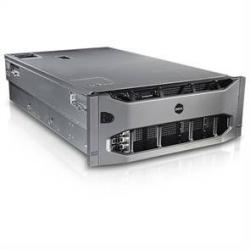
The SAP platform, running on a Dell PowerEdge system, allows customers to look at aggregated data and perform analytics that would not have been possible in the past because of the time and resources involved.
An article in a recent Dell newsletter put it this way: “Customers benefit from real time actionable intelligence with in-memory computing technologies. SAP’s in-memory database software, performance optimized for Dell PowerEdge R910, helps customers conquer the challenges common to data-driven businesses. Organizations can immediately predict trends, see changes in real time, provide the right offers and service levels, as well as predict cash flows from massive quantities of real time data resident in the main memory of a server. Dell’s SAP HANA solutions platform is infrastructure that supports the speed, flexibility and scalability to meet the demands for increased business productivity.”
Quirk said he was recently talking with the CEO of a manufacturing company in the Northeast about typical issues such as production scheduling, product launches, engineering, and finally, analytics. When Quirk described SAP HANA, the CEO commented that deploying the in-memory database software would completely change the way he analyzes the company’s business. Presently there was a considerable lag between the time the massive amounts of data being collected on the production floor or generated by the sales organization was available for analysis. With the SAP software running on Dell’s servers eliminating the lag time from data collection to aggregation, the executive said he would be able to immediately determine if he is making the right decisions about what products to take to market.
Another East coast company is already using SAP HANA to correct out of stock problems associated with promotions. Previously the marketing organization would estimate potential sales in the company’s various markets and the factory would manufacture enough product to meet expected demand. If the promotion results deviated from the projections – and they invariably did – by the time the data was collected, aggregated and analyzed it was already too late. The upshot: out of stock situations that were frustrating for the customers, the manufacturer and everyone else up and down the supply chain.
Now, using SAP HANA, the company has been able to reduce stock outages during promotions by 45 percent. The ability to quickly aggregate and analyze incoming data allows the company to make expedient changes in production schedules, transportation, and activities on the production floor to better meet the needs of its customers.
Quirk comments that Dell has always been good at taking technology to mid-sized companies, and that includes the mid-sized manufacturers that make up the “missing middle.” His team is exploring “packaging these analytics in consumable bites” – application-specific analytic subsets that are packaged with a PowerEdge server and support and delivered for a fixed cost.
Says Quirk, “This technology, although new, is affordable for mid-sized manufacturers. It give them the power to do analytics that they were not able to do in the past and helps them get through the big data problems they may be having. Now they can take all the data they have been collecting and do a better job of running the business.”


