

Kick it Up Another Notch
Kickstarter’s getting all kinds of attention these days, and with good reason – it’s a clever idea that allows small businesses and creative projects to get funding from generous, far-flung souls. You want to make a documentary and the heartless bank doesn’t think that $50,000 for a searing, hourlong expose on the lives and loves of anteaters is a good investment? Their loss. Kickstart that bad boy! Enough people invest, and suddenly you’re in business, laughing all the way to the Academy Awards. Microfinancing and crowdsourced funding may be concepts that were alien just a few years ago, but no one can argue that it’s taken off.
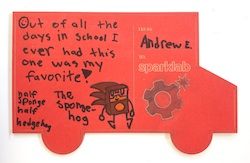 And it’s naturally self-sorting, too. Projects that, you know, just aren’t that great an idea, or are asking for too much, or what have you, they just don’t get their funding. Others, meanwhile, are spectacularly good causes or are requested by people or companies that consumers trust. Witness, for example, Stanford’s SparkLab, which raised $31,275 from 426 backers to launch an educational build-mobile, a rolling hands-on learning environment where kids can get real experience building things. Thanks to the donations, SparkLab’s closer to getting its own truck and a bunch of equipment which it can then drive around to schools. Hands-on learning is fantastic, the kids will have fun, and they’ll get access to a learning environment they wouldn’t otherwise have.
Look, let’s be honest: schools, like everything else, are having to do more with less. A lot of elective programs are getting cut. Core academics are important, but every kid deserves as well-rounded an educational opportunity as possible, and it’s getting harder and harder for schools to support that. So something like SparkLab, which plans to outfit its truck with laser cutters, 3D printers, and other awesome tools, is just plain good all around. But “just plain good” doesn’t necessarily translate into financial support – except in environments like Kickstarter, where lots of people throw in a few bucks and feel like they’re supporting a good cause.
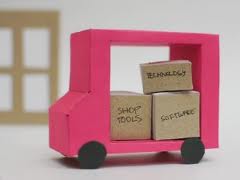 SparkLab’s edu-truck offers another benefit, one that should be close to the hearts of anyone interested in manufacturing. It’s not just hands-on learning, it’s vocational hands-on learning. Vocational education is in an especially precarious position in the United States, for various artificial reasons: the misguided perception, for example, that blue-collar skills are somehow lower-class. We are losing skilled workforce at a staggering rate, and any effort to curb that should be welcome. So while I’d happily chip in for a rolling hands-on musical instrument education project too, what SparkLab is trying to do strikes me as filling an especially significant void in our K-12 system.
I think it’s become depressingly fashionable to bust on schools for cutting important programs, even as we all tend to vote down the millages that help fund public education in our areas. I’ve voted in plenty of local elections and I don’t usually vote in favor of raising my already crushing property taxes. It’s not because I hate kids or want all kids to grow up uneducated, it’s because my annual property tax is already something like eighteen bazillion dollars. Even if that weren’t so, whatever your politics, nobody likes to raise their own taxes. I mean come on. Schools, therefore, are not to blame for the necessities they face. What are they going to cut? English class or Shop class? Sure, the argument could be made for either, but let’s be honest, the center’s more likely to hold.
The Kickstarter for SparkLab is over. They reached their funding goal, which means that Kickstarter will bill the people who contributed and then release the funds to the team. If you don’t reach your goal, nobody pays anything and the venture’s not funded. Key lessons to be learned from this – and many other – successful Kickstarter projects is that SparkLab didn’t ask for an insane amount of money and what they did ask for was going to a worthy effort. If you want your Kickstarter to succeed, you shouldn’t be greedy, and you need to either be doing something for the common good or asking for help to produce something people really want.
There are two morals to this story. One is that endeavors like SparkLab have a place in our world, and they really deserve to be supported by everyone who’s able to help. The other is that endeavors like Kickstarter may well pave the road to entirely new models of venture funding. So while kids in school get to play with laser cutters and 3D printers, we grown-ups should be thinking about the future, and how our own efforts can leverage opportunities that just a few years ago didn’t even exist.


