
December 16, 2011
As an owner of a not-quite-vintage, but too-old-for-OEMs-to-care about Corvette, I recently found myself wondering if digital manufacturing could come to my rescue.
But let me start at the beginning.
It’s a 1994 Corvette Convertible with over 100,000 miles on it. It is a lot of fun to drive, particularly when the weather cooperates. And it certainly makes going to work and running errands a little more enjoyable. But the 17 year old car has started to create more problems than joy. I recently discovered that the tray that secures the engine computer had broken. It wasn’t a highly technical or complicated part; in fact it was little more than a metal alloy shelf. Maybe its simplicity is why OEMs no longer stock it, nor do many of the aftermarket parts distributers like Ecklers and Corvette America. The repair garage ordered the part, and it came in damaged. When they tried to get a replacement they found that there were no others in stock!
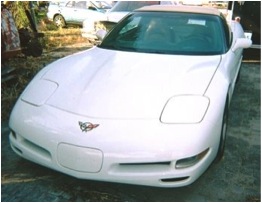
No problem, I thought. This is the internet age; certainly I can find an engine computer tray from lesser known suppliers or on-line junk yards, right?
Well, actually, no. After many fruitless searches I find myself empty handed. I did find someone who would machine the part for me in chrome, but at an exorbitant cost, and even then, no assurances it would actually work. Chrome isn’t the right material for the part, sitting next to the engine and above the battery. However, I didn’t relish spending endless weekends at swap meets, searching for the part. But seeing my Corvette parked on a beautiful sunny 70 degree day for lack of a simple metal tray was too much to bear.
I was at the point of purchasing a milling machine for my back yard and grinding the tray myself when I thought, “Hey, I work for NCMS, the leader in digital manufacturing. Certainly this new approach to production can help me.” I mean, after all, Jay Leno has a 3-D printer in his garage to help keep his large collection of old cars on the road, making the parts he needs on demand. Okay, okay - his mechanic probably does it, not him. But I don’t have an extra $10,000 to buy such a machine or even more to have a mechanic at my disposal. Still, the technology is out there to digitally scan the part and recreate it, exactly.
So my next goal was to find someone on-line that is doing this – crafting parts for folks like me on their 3-D printer, replacing parts on demand. Seems logical, right? But so far I have not had any luck.
There are great websites like MakerBot, Instructables (recently bought by Autodesk) and Thingiverse that lets people share 3D designs and shows some of the things made by digital printing, but they are not really set up to address my kind of problem.
So, DM Report readers – any ideas? Do you know anyone that is providing this as a service or someone that will take pity on me and help me digitally make this part?
After all, convertible weather will be here again before we know it.
At 30,000 feet, equipment failure is simply not an option, which is part of why additive manufacturing has been a bit slow to catch on in the aerospace industry. But according to Michael Idelchik, vice president of GE’s advanced technologies research, GE Aviation is still looking for more ways that additive manufacturing can help to create a better airplane...
Read more...
Despite reassurances of automation professionals throughout the industry, some experts simply aren't convinced that technological advancements in robotics and automation aren't negatively impacting U.S. employment rates, which is what Erik Brynjolfsson and Andrew McAfee of the MIT Sloan School of Management have been arguing over the past year and a half.
Read more...
As far as modeling and simulation are concerned, nautical transportation isn’t one of the first things to come to mind. Still, it presents a unique use case for computer-integrated manufacturing, as the focus of the modeling and simulation is on the construction process itself. By coordinating the insertion of massive hull blocks, it not only streamlines construction, but it improves safety as well.
Read more...
Jun 14, 2013 |
Last month’s news of 3D printers entering brick-and-mortar Staples stores may have represented a major step in mainstream commercialization of additive manufacturing tools, but in what is perhaps an even bigger step, online retail giant Amazon recently added a dedicated section of its site to 3D printers and supplies.
Read more...
Jun 12, 2013 |
In the wake of the economic downturn, reshoring efforts and increased emphasis on STEM, there’s plenty of uncertainty about where global manufacturing is headed in the next several years. Helping to give us a better sense of this trajectory is a group of thought leaders who have come together to try and answer the most pertinent questions about the future.
Read more...
Jun 11, 2013 |
As the U.S. manufacturing sector fights to stay competitive on a global scale, the issue of improving STEM education has been key. But in a recent study measuring how workers in STEM fields are putting their educations to use it was found that half didn't need a bachelor's degree.
Read more...
Jun 10, 2013 |
Chevrolet has added digital manufacturing technology to its arsenal. Abandoning clay for their latest Malibu, the automaker has turned to two types of additive manufacturing to meet their rapid prototyping needs.
Read more...
Jun 07, 2013 |
When you think of the aerospace technologies, the term “cutting-edge” doesn't often lag far behind. Even so, GE Aviation's new jet engine fuel nozzle is helping to take that association one step further: rather than being made from 20 different parts, it's manufactured in a single step with a 3D printer, which has made it 25 percent lighter.
Read more...
03/20/2013 | SAS | This white paper examines how an enterprise-wide quality platform can turn existing data into substantial and sustainable revenue growth and cost savings for global manufacturers. The paper is based on the findings of the IW/SAS Enterprise Quality Survey completed by more than 400 manufacturing executives. The objectives of the survey were to determine concerns about quality among manufacturers; investigate the tools used to measure quality; and examine how using enterprise-wide analysis on quality data improves performance.
07/19/2011 | Univa | TATA Steel Automotive Engineering’s concern grew when open source Grid Engine support and development was discontinued by Oracle. Grid Engine is a business critical application in their environment. They recognized the likelihood that product enhancements and innovations would cease. Read how TATA Steel Automotive Engineering moved from a self-support solution to Univa Grid Engine. You can get more out of your environment and your budget with Univa Grid Engine.
Copyright © 2011-2013 Tabor Communications, Inc. All Rights Reserved.
Digital Manufacturing Report is a registered trademark of Tabor Communications, Inc. Use of this site is governed by our Terms of Use and Privacy Policy.
Reproduction in whole or in part in any form or medium without express written permission of Tabor Communications Inc. is prohibited.
Powered by Xtenit.